


 Send Inquiry
PCE SUPERPLASTICIZER PLANT
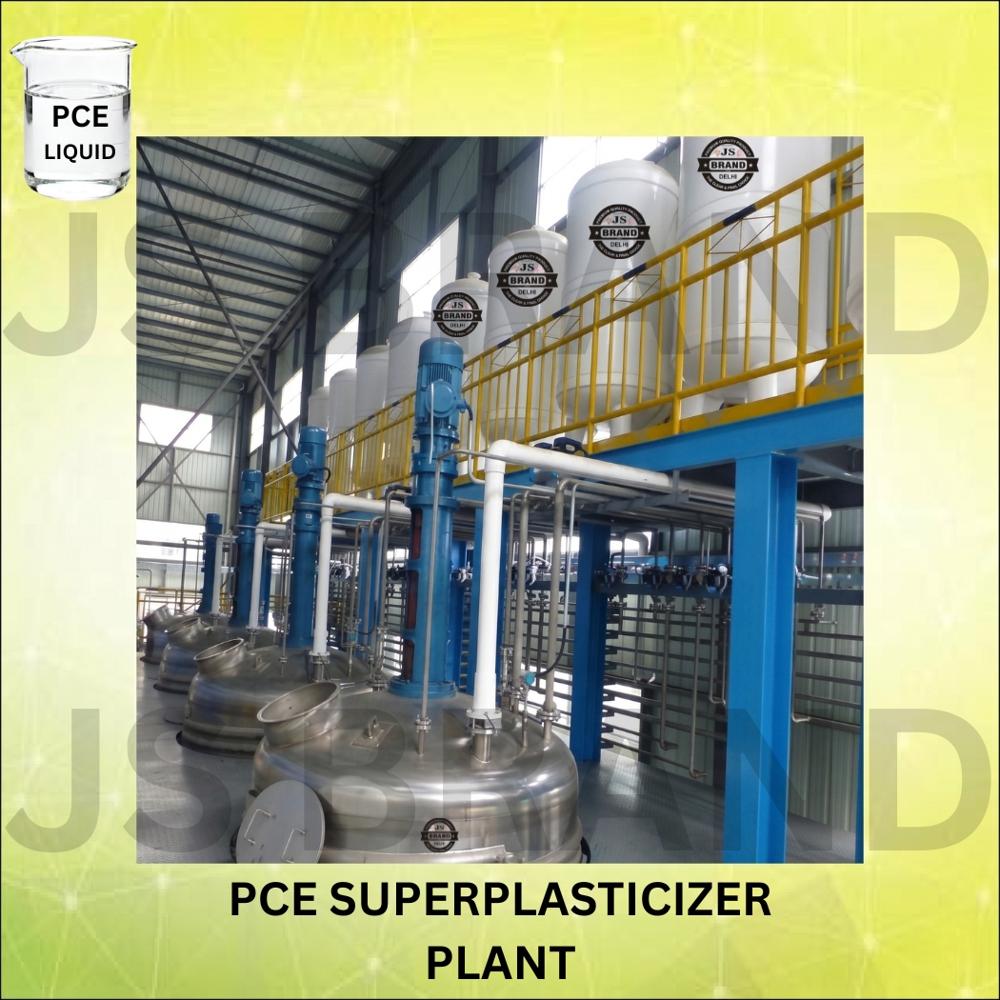

PCE SUPERPLASTICIZER PLANT Specification
- Appearance
- Colorless to pale yellow liquid
- HS Code
- 39069090
- Chemical Name
- Polycarboxylate Ether (PCE)
- Poisonous
- Non-poisonous
- Application
- Production of PCE based superplasticizers for concrete admixtures
- Usage
- For manufacturing high range water reducing admixtures
- Water Content
- < 5%
- Grade
- Industrial
- Color
- Clear to pale yellow
- Feature
- High efficiency, automated process, corrosion resistant construction
- Purity
- >98%
- Type
- Superplasticizer Manufacturing Plant
- Physical Form
- Liquid
- Smell
- Mild
- Other Names
- PCE Plant, Polycarboxylate Ether Plant
- Ph Level
- 6.0 - 7.5
- Plant Installation
- Turnkey Project Execution
- Material of Construction
- Stainless Steel 304/316
- Power Supply
- Three Phase, 415V, 50Hz
- After Sales Service
- Available
- Cooling System
- Provided as per process requirement
- Control System
- PLC Control Panel, SCADA Optional
- Vessel Volume
- 500 L to 20,000 L
- Discharge Valve
- Pneumatic or Manual
- Capacity Range
- 1-20 Tons/Day (Customizable)
- Automation Grade
- Automatic / Semi-automatic
- Heating System
- Steam/Hot Oil Jacket
- Mixing System
- High-speed agitator and homogenizer
- Agitator Motor Power
- 3 - 30 HP (Depending on size)
PCE SUPERPLASTICIZER PLANT Trade Information
- Minimum Order Quantity
- 1 Piece
- FOB Port
- DELHI
- Payment Terms
- Cash Advance (CA), Cash in Advance (CID)
- Supply Ability
- 1 Piece Per Month
- Delivery Time
- 15 Days
- Sample Available
- No
- Sample Policy
- Sample costs shipping and taxes has to be paid by the buyer
- Main Export Market(s)
- Asia
- Main Domestic Market
- All India
About PCE SUPERPLASTICIZER PLANT
Polycarboxylate Ether (PCE) superplasticizer plant is an industrial facility designed to synthesize high-performance concrete water-reducing admixtures. Using polymerization technology, the plant blends polyether macromonomers with acrylic acid to create comb-shaped polymers that improve concrete workability and strength.High Efficiency & Customizable Design
This PCE Superplasticizer Plant is available in a flexible capacity range from 1 to 20 tons per day, allowing you to scale production as needed. Its modular design utilizes robust stainless steel 304/316, which delivers exceptional corrosion resistance and longevity even under rigorous industrial applications. High-speed agitators and homogenizers ensure uniform mixing, critical for consistent product quality.
Advanced Control and Automation
Benefit from sophisticated automation with a choice of automatic or semi-automatic operation. The plant is equipped with a PLC control panel, and a SCADA system is optionally available for real-time monitoring and comprehensive control. This not only improves production consistency but also minimizes human error, boosting operational efficiency across the manufacturing process.
Comprehensive Process Utilities
The plant is fitted with both steam/hot oil jacket heating and process-specific cooling systems, providing the flexibility required for different production stages. Pneumatic or manual discharge valves, efficient agitator motors ranging from 3 HP to 30 HP, and turnkey project installation ensure that the plant can be seamlessly integrated within your production facility. After-sales service is readily available to support uninterrupted operation.
FAQ's of PCE SUPERPLASTICIZER PLANT:
Q: How does the PCE Superplasticizer Plant ensure consistent product quality?
A: The plant utilizes a high-speed agitator and homogenizer system within corrosion-resistant stainless steel vessels for uniform mixing. Automated and PLC-controlled operations further minimize inconsistencies, resulting in a consistently high-purity (over 98%) Polycarboxylate Ether (PCE) product.Q: What is the process for producing PCE-based superplasticizers in this plant?
A: The production process involves mixing input materials in heated, jacketed vessels using high-speed agitation and homogenization. Precise temperature control, PLC monitoring, and state-of-the-art discharge systems facilitate efficient conversion of raw materials into high-grade liquid superplasticizer suitable for concrete admixtures.Q: When should the plant's heating and cooling systems be used during operation?
A: Heating, provided by a steam or hot oil jacket, is used during the initial mixing and reaction phases to achieve optimal product formation. The cooling system is activated as required to maintain product stability or manage exothermic reactions. Both systems are designed to ensure process safety and product quality.Q: Where can this PCE Superplasticizer Plant be installed?
A: The plant is ideal for manufacturing facilities involved in concrete admixture production. It is delivered and installed as a turnkey project anywhere in India and can also be customized for international installations as per client requirements.Q: What are the benefits of using this automated plant for PCE production?
A: Key benefits include high process efficiency, excellent product purity, minimized manual intervention, robust corrosion resistance, and the flexibility to produce different batch sizes. These features contribute to reduced operational costs and consistent supply of high-performance superplasticizer.Q: How is after-sales support handled for plant users?
A: Comprehensive after-sales service is available, covering installation assistance, training, troubleshooting, and maintenance to ensure reliable, long-term productivity for all customers.Q: What safety and environmental features are integrated into the plant design?
A: The plant operates with non-poisonous, mild-smelling raw materials and the entire system is enclosed to prevent leakage and environmental contamination. The robust stainless steel construction further enhances safety and hygiene during production.Price 3550000.0 INR/ Piece
- Minimum Order Quantity
- 1 Piece
- Supply Ability
- 1 Piece Per Month
- Delivery Time
- 15 Days
- Main Domestic Market
- All India
- Main Export Market(s)
- Asia
 Get Latest Price

Price:
- 50
- 100
- 200
- 250
- 500
- 1000+

More Products in POLYCARBOXYLATE ETHER MACHINE Category
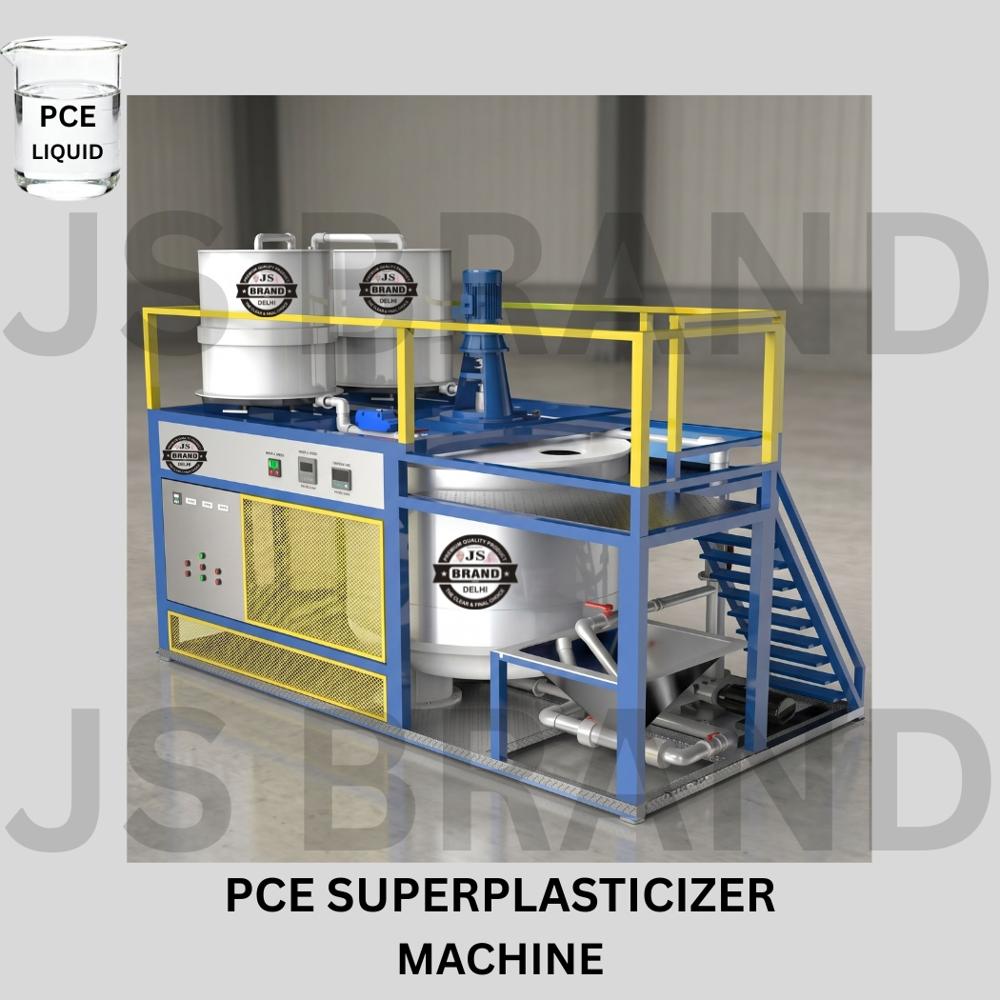
PCE SUPERPLASTICIZER MACHINE
Price 3180000.0 INR / Piece
Minimum Order Quantity : 1 Piece
Purity : >98%
Grade : Industrial Grade
Poisonous : NO
Operating Type : Semi Automatic
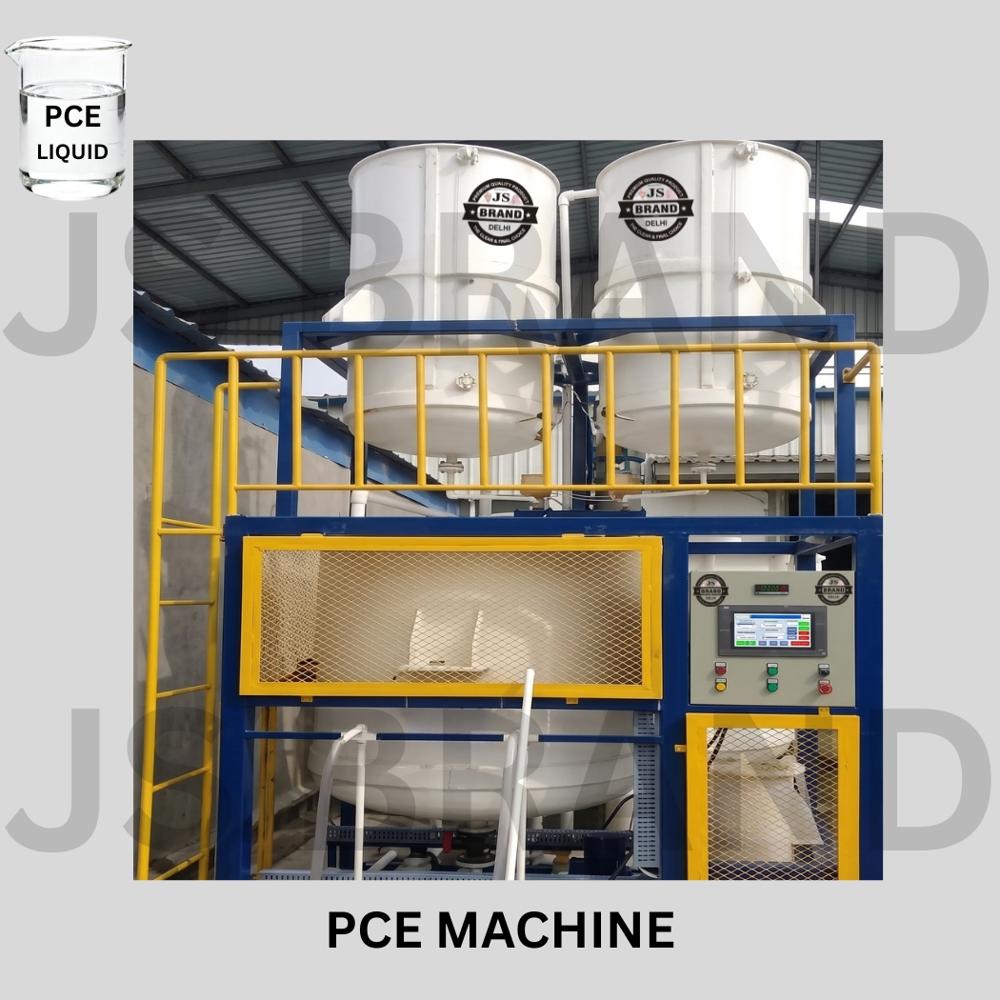
PCE MACHINE
Price 4050000.0 INR / Piece
Minimum Order Quantity : 1 Piece
Purity : >94%
Grade : Construction grade
Poisonous : Other, Nontoxic
Operating Type : Semi Automatic
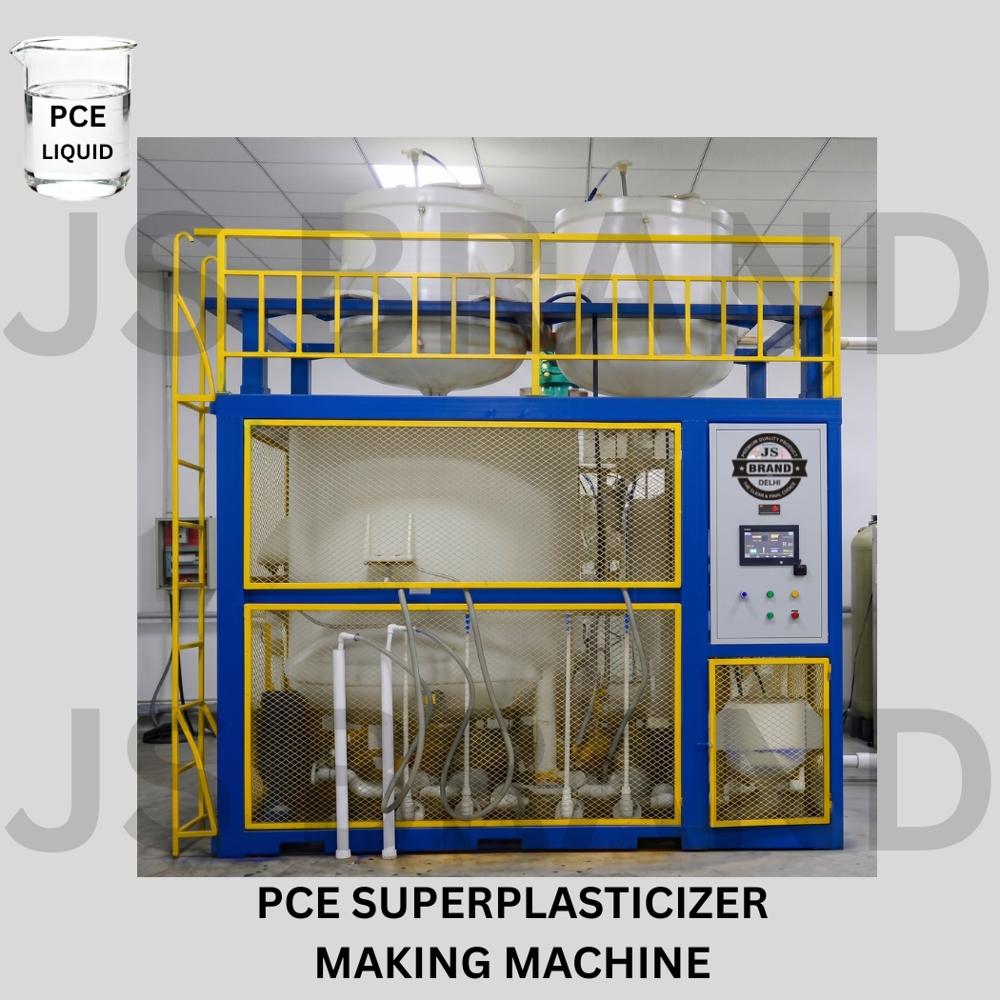
PCE SUPERPLASTICIZER MAKING MACHINE
Price 4100000.0 INR / Piece
Minimum Order Quantity : 1 Piece
Purity : Enables up to 98% product purity
Grade : Industrial Grade
Poisonous : Other, Nonpoisonous machine (processed chemicals require precautions)
Operating Type : Semi Automatic
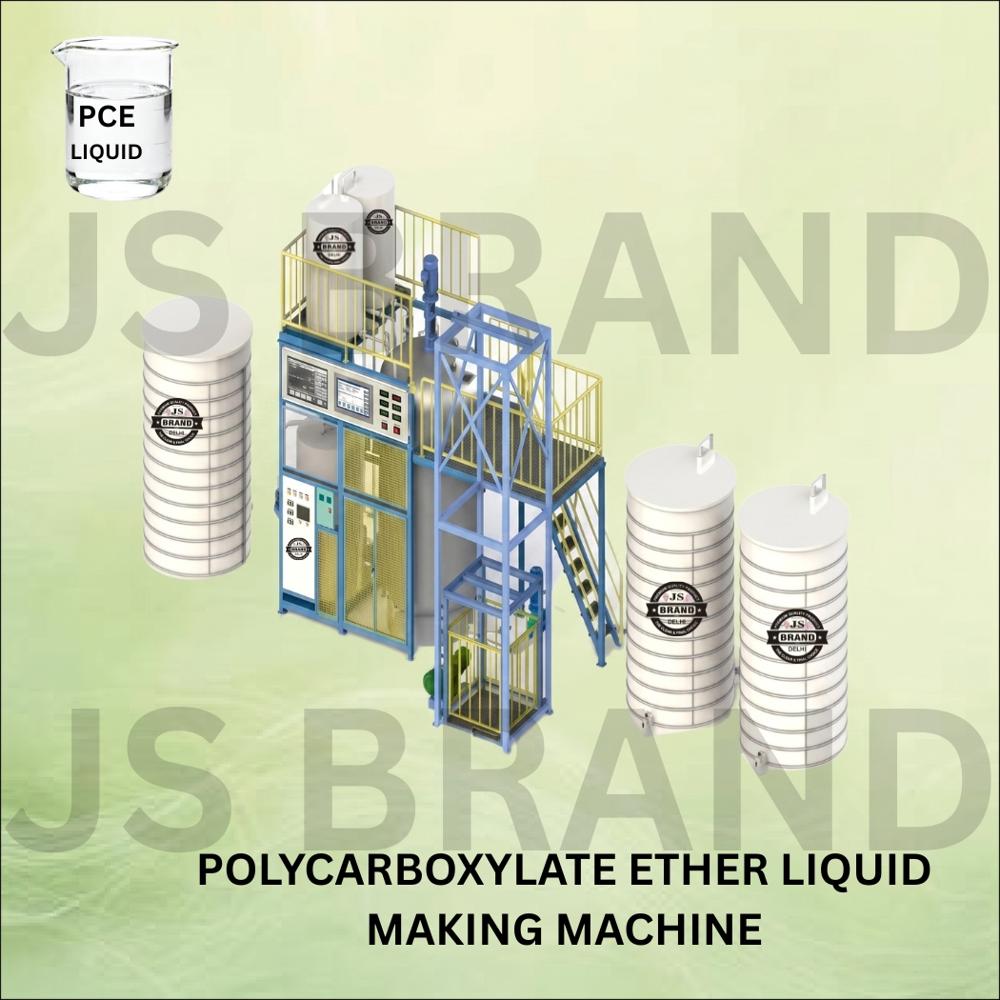
POLYCARBOXYLATE ETHER LIQUID MAKING MACHINE
Price 4150000.0 INR / Piece
Minimum Order Quantity : 1 Piece
Purity : Process dependent, typically up to 99% for end product
Grade : Industrial
Poisonous : Other, No (machine)
Operating Type : Semi Automatic

Developed and Managed by Infocom Network Private Limited.